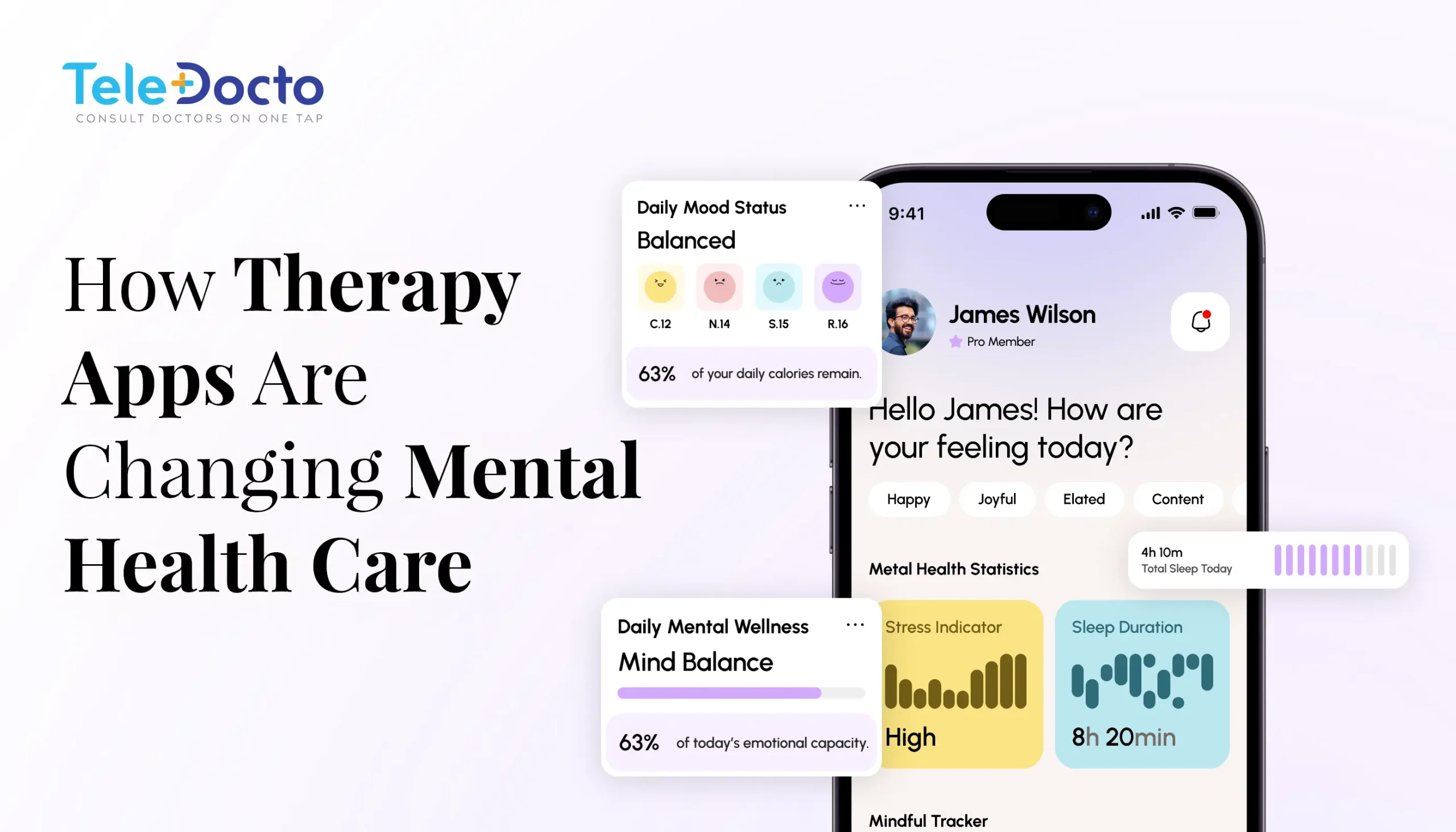
Mental Health & Therapy Apps Will Overtake Physical Clinics
Mental health care is going through a quiet but powerful shift. What once required weeks of waiting, travel to clinics, and rigid appointment slots is now available on a smartphone—private, flexible, and on demand. As digital health adoption accelerates, mental health and therapy apps are no longer just an alternative. For many users and providers, they are becoming the preferred model of care.
This change is not driven by technology alone. It’s shaped by evolving patient expectations, therapist workflow challenges, rising mental health demand, and the scalability limits of physical clinics. In this blog, we explore why mental health apps and therapy apps are set to overtake physical clinics, how telemedicine is enabling this transition, and what it means for healthcare providers, therapists, and digital health platforms.
The Growing Pressure on Traditional Mental Health Clinics
Physical mental health clinics have long been the backbone of therapy and counseling. However, they are struggling to keep up with modern demand.
Most clinics face issues such as long waiting lists, limited therapist availability, high operating costs, and geographic constraints. Patients often wait weeks for their first session, only to drop off due to scheduling conflicts or travel inconvenience. For people dealing with anxiety, depression, burnout, or trauma, these delays can be critical.
Clinics are also expensive to run. Rent, utilities, front-desk staffing, compliance overhead, and fixed schedules limit scalability. Adding more patients usually means adding more space, more staff, and more cost—making growth slow and rigid.
These structural limitations have opened the door for a more flexible, patient-centric approach.
Why Mental Health Apps Are Scaling Faster Than Clinics
A mental health app removes many of the friction points that physical clinics struggle with.
Users can access therapy from home, during breaks, or in moments when support is actually needed—not just during fixed office hours. App-based care fits naturally into modern lifestyles, especially for working professionals, students, parents, and remote workers.
From a provider perspective, apps allow therapists to serve more patients without being limited by location or physical space. A single therapist can offer video sessions, async messaging, check-ins, and guided therapy tools through one digital interface.
This scalability is why best mental health apps are seeing rapid adoption across global markets, particularly in urban areas and underserved regions where clinic access is limited.
Therapy Apps Are Redefining How Care Is Delivered
Unlike traditional therapy models that rely only on weekly sessions, modern therapy apps support continuous mental health care.
Patients can engage through:
- Scheduled video consultations
- Secure chat and follow-up messaging
- Mood tracking and journaling
- Guided exercises and self-help programs
- Crisis support workflows
This hybrid model improves engagement and outcomes. Therapy becomes an ongoing process rather than a once-a-week appointment.
For therapists, this approach reduces burnout. Instead of back-to-back in-person sessions, care is distributed across digital touchpoints, allowing better time management and patient monitoring.
Telemedicine Has Normalized Digital Mental Health Care
The acceptance of virtual healthcare has played a major role in this shift. What started as a necessity has now become a preference.
Today, patients are comfortable trusting a telemedicine app for sensitive mental health conversations. Secure video calls, encrypted messaging, and digital records have eliminated earlier concerns around privacy and quality of care.
In fact, many users report feeling more open and comfortable discussing mental health concerns from familiar environments rather than clinical settings.
As telemedicine trends continue to evolve, mental health remains one of the strongest use cases—because it relies more on conversation, continuity, and trust than physical examination.
Why Mental Health Apps Often Deliver Better Access and Outcomes
One of the biggest advantages of app-based therapy is accessibility.
People who previously avoided therapy due to stigma, travel, or time constraints now have discreet access through their phones. This has significantly increased early intervention, especially among younger users and first-time therapy seekers.
Apps also enable data-driven care. Mood tracking, session history, and engagement analytics help therapists personalize treatment plans more effectively than paper-based clinic records.
Over time, this leads to better adherence, lower dropout rates, and improved long-term outcomes.
The Rise of Telehealth Platforms for Therapists
The shift is not just patient-driven. Therapists themselves are increasingly choosing digital-first models.
Modern telehealth platforms for therapists offer tools that physical clinics cannot easily match:
- Automated scheduling and reminders
- Integrated billing and payments
- Secure documentation and session notes
- Patient engagement analytics
- Flexible working hours
These platforms allow therapists to focus more on care and less on administration. Many independent therapists and small practices now prefer digital platforms over renting clinic space.
Why White Label Telemedicine Platforms Are Powering This Growth
Behind many successful mental health and therapy apps is a white label telemedicine platform.
Instead of building complex systems from scratch, healthcare businesses and startups are launching branded mental health apps using ready-made, customizable platforms. These solutions already include core features like video consultations, messaging, scheduling, security, and compliance.
A white label telehealth platform allows:
- Faster go-to-market
- Lower development and maintenance costs
- Custom branding for clinics or therapy networks
- Scalability across regions and specialties
This model is accelerating innovation in mental health care by lowering technical barriers for providers.
Physical Clinics Won’t Disappear—But Their Role Will Change
This shift does not mean physical clinics will vanish completely. Instead, their role is evolving.
In-person clinics will increasingly focus on:
- Severe or high-risk cases
- Specialized therapies requiring physical presence
- Diagnostic evaluations and multidisciplinary care
Routine therapy, follow-ups, and ongoing mental health support will continue moving toward digital platforms. In many cases, clinics themselves are adopting hybrid models that combine in-person care with app-based therapy.
Why Patients Are Choosing the Best Telehealth App Over Clinics
From a patient’s perspective, convenience is only one part of the decision.
Users choose the best telehealth app because it offers:
- Faster access to licensed therapists
- Transparent pricing and flexible plans
- Session continuity across devices
- A sense of control over their care journey
Apps also provide choice. Patients can switch therapists, explore different therapy formats, and access resources instantly—something traditional clinics struggle to offer.
Mental Health Apps Are Better Suited for Global Demand
Mental health challenges are rising worldwide, but therapist availability is uneven across regions.
Digital platforms solve this imbalance. A single telemedicine app can connect users in remote or underserved areas with qualified therapists across cities or even countries, while maintaining compliance and security.
This global reach is one of the strongest reasons mental health apps are outpacing physical clinics in adoption and growth.
Data, AI, and the Future of Therapy Apps
As technology matures, therapy apps are becoming smarter.
Data analytics, AI-driven insights, and personalized care pathways are enhancing therapist decision-making without replacing human connection. Apps can flag risk patterns, recommend interventions, and support therapists with better context.
Physical clinics, limited by manual workflows, cannot easily match this level of intelligence and scalability.
What This Shift Means for Healthcare Providers
For clinics, hospitals, and therapy networks, the message is clear: digital mental health is no longer optional.
Adopting a white label telemedicine platform allows providers to extend their services beyond clinic walls, reach more patients, and build sustainable care models for the future.
Those who adapt early can position themselves as modern, accessible, and patient-first—while those who resist risk losing relevance in an increasingly digital healthcare ecosystem.
Final Thoughts: The Inevitable Transition
Mental health & therapy apps are not a trend—they are a response to real-world limitations of physical clinics.
By offering accessibility, scalability, personalization, and continuity of care, mental health apps and therapy apps are redefining how therapy is delivered. Telemedicine has removed barriers that clinics could not, and patients have embraced the change.
As demand continues to rise, digital-first mental health care will lead the way supported by robust telehealth platforms, secure technology, and therapist-driven care models.
The future of mental health is not confined to clinic walls. It lives where patients are on their phones, on their schedules, and on platforms designed for modern care.
Frequently Asked Question
Yes, for many people they are. Studies and real-world usage show that video therapy and ongoing digital support can be just as effective as clinic visits, especially for anxiety, stress, and depression.
Reputable mental health apps use secure encryption, private login systems, and healthcare-grade security standards to protect conversations, records, and personal information throughout every session.
Yes. In many regions, licensed therapists are allowed to provide virtual care through approved telehealth platforms, as long as they follow local regulations and patient privacy requirements.
No. Mental health apps complement clinics rather than fully replacing them. Severe cases and specialized treatments may still need in-person care, while apps handle ongoing therapy and follow-ups.
White label telehealth platforms let clinics and therapists launch branded apps quickly without building technology from scratch, helping them reduce costs while expanding digital mental health services.
Recent Blogs

Virtual care is no longer “the alternative.” It is becoming the default first touchpoint for millions of patients, and the delivery layer for everything from follow-ups and chronic care to behavioral health and post-discharge monitoring. In 2026, the conversation is shifting from “Should we offer telehealth?” to “How do we build telemedicine solutions that feel […] Read more

Healthcare is flowing towards a new era. The days of crowded waiting rooms, long travel hours & fragmented communication are being replaced by always-accessible care where a doctor is just one tap away. Virtual healthcare is no longer a backup plan. For millions, it has become the primary care channel. The biggest force behind this […] Read more

Telemedicine has changed the way how patients connect with doctors. From routine check-ups to specialist consultations, more people now expect healthcare to be just a click away. But for hospitals, clinics & startups running a telemedicine platform, the real challenge isn’t just about having the technology. It’s about having enough qualified, licensed providers to meet […] Read more